

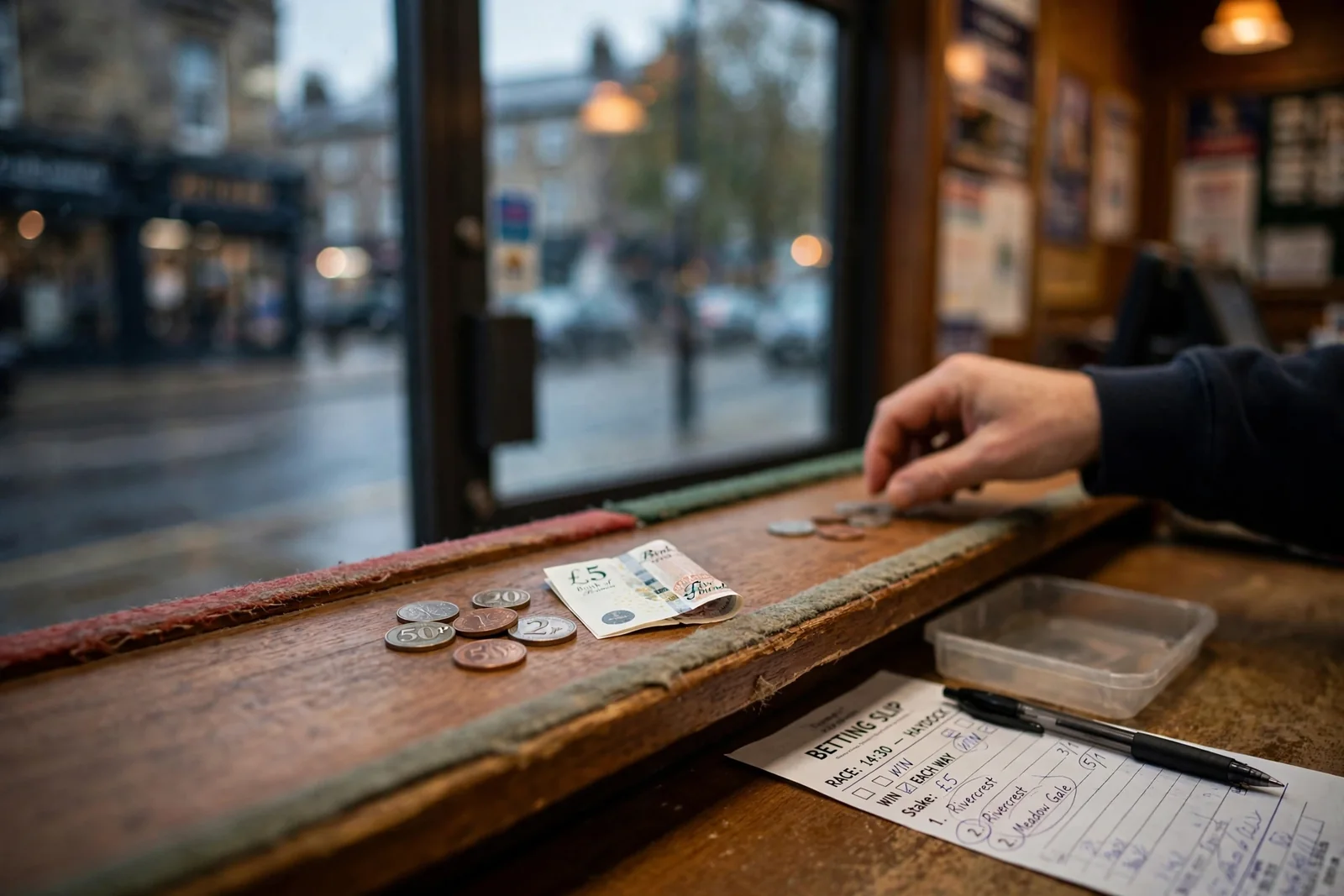
A £4 deposit may be allowed without being the cashier’s minimum, and payment routes can set different thresholds.
Where a £4 Deposit Sits Among UK Casino Minimums
A £4 cashier minimum would sit between the lowest deposit level reported at some UK casinos and the higher amounts associated with direct banking in a specialist casino review. It is therefore a plausible point on the scale of possible deposit thresholds, but that position alone does not identify a casino that accepts exactly £4 as its minimum. An operator may set a different minimum, or its cashier may apply different conditions to particular payment routes.
The lowest reported level is £1. Some UK casinos accept deposits at that amount, so £4 is not the smallest threshold available across the market. The distinction matters: a casino with a £1 minimum would also permit a larger deposit, but that does not make £4 its minimum. A search for a £4 minimum is narrower than a search for casinos that simply allow a deposit of £4 or less.
£1 Minimum Deposit Casinos in the UK: How It Works
Direct banking sits higher in the reported range. One specialist casino review described £10 as the typical minimum among UK casinos accepting this method, while noting operators with thresholds of £5 or £20. This is a report from a particular review, not a fixed rule for every casino or a guarantee that the same cashier minimum applies across operators. It also does not establish a direct-banking option at £4.
The difference between a minimum and an accepted amount is central. A casino that sets its minimum at £1 may accept a £4 deposit, but its minimum is still £1. A casino with a £5 minimum would not accept £4 as the initial deposit through that route, even if the account could later hold a balance of that size. Likewise, a threshold reported for direct banking cannot automatically be applied to another payment method or to another operator.
This makes “£4 minimum deposit” a specific claim about the cashier setting, rather than a general description of a small deposit. To establish that claim for an individual casino, the published minimum must be stated for that operator and the relevant payment route. A casino’s ability to accept deposits below £4 does not, by itself, confirm that it has a £4 minimum; nor does a higher reported direct-banking threshold rule out a different setting elsewhere.
The available tiers also show why a single market-wide figure would be misleading. The reported £1 option is at the lower end, while the direct-banking figures described by the specialist review include thresholds both below and above £10. These figures describe variation, not a uniform progression in which every intermediate amount is necessarily offered. In particular, the presence of lower and higher thresholds cannot be used to infer a confirmed group of casinos whose minimum is exactly £4.
For comparison, the amount deposited and the operator’s minimum are separate facts. A deposit of £4 may be possible at a casino whose cashier minimum is lower, but that is not the same as a £4-minimum casino. Conversely, an operator with a minimum above £4 would not meet the exact threshold for a first deposit by that route. Precise wording matters when comparing listings: “accepts a £4 deposit” and “has a £4 minimum” do not mean the same thing.
The reported figures provide context, but they do not support a dependable named list of UK casinos with an exact £4 cashier minimum. The clearest conclusion is limited: £4 lies above a deposit level accepted by some casinos and below several direct-banking minimums described in a specialist review. Exact availability must be established operator by operator; the broader range alone cannot confirm which casinos set their minimum at £4.
Top online casinos in the UK
- SpinFormulaBonus: 550% Up To £15,000 + 550 FS · Payout speed: 1-3 business days
- AmunbetBonus: Join now and get 450% up to 2,700 GBP + 450 FS · Payout speed: 1-3 business days
- NightWinBonus: £900 + 400 free spins · Payout speed: 1-3 business days
- NightLuckBonus: Welcome Pack + 805% Up To 6400€ + 280 FS · Payout speed: 1-3 business days
- DieselwinBonus: Welcome Pack 250% up to £4000 + 200 FS · Payout speed: 1-3 business days
- BritsinoBonus: Welcome Package – Get your £2,200 + 2,000 FS · Payout speed: 1-3 business days
- WinBeastBonus: €5000 + 500 FS + €650 Freebet · Payout speed: 1-3 business days
- EvoSpinBonus: 125% up to €2500 + 125 Free Spins · Payout speed: 1-3 business days
- JetsetspinsBonus: 200% Bonus + 100 Free Spins + Free Royal Wheel · Payout speed: 1-3 business days
- BeOnBetBonus: 100% up to €500 + 100 FS · Payout speed: 1-3 business days
What Counts as a Legitimate Low-Deposit Casino
A low cashier minimum and legitimate UK status are separate questions. The cashier figure describes the smallest payment an operator says it will accept. It does not establish that the operator holds the licence required to offer remote gambling to customers in Great Britain. Conversely, evidence of a UK Gambling Commission licence does not, by itself, show that the cashier accepts a £4 deposit.
That distinction matters when assessing claims about a legitimate or trusted casino with a £4 minimum. A deposit threshold is an operational detail, while licensing is a regulatory status. Neither can be inferred from the other, and a page advertising a small minimum is not sufficient evidence of either claim.
Licensing
Remote gambling operators serving customers in Great Britain must hold a licence from the UK Gambling Commission regardless of where the company is based.
What licensing establishes
Remote gambling operators serving customers in Great Britain must hold the relevant licence from the UK Gambling Commission, regardless of where the company is based. Online gambling is legal in the UK through licensed and regulated sites. A casino’s UK-facing service therefore needs to be assessed against its current regulatory status, rather than relying on the appearance of its website, a low deposit figure or the presence of familiar games.
The Commission’s register is the appropriate place to check whether an operator is listed and what its licence covers. The name shown on a casino website may not be the same as the legal entity holding the licence, so the names and details need to correspond. A licence record supports a claim about regulatory authorisation; it does not guarantee that every operational detail, including a particular cashier minimum, is current.
The distinction also limits what “safe” can responsibly mean. A UKGC licence indicates that an operator is within the British regulatory system. It is not a promise that gambling will be without financial risk, nor proof that a specific payment will be accepted. A claim of a £4 minimum still needs to be supported by current operator information or a working cashier, independently of the licence check.
What low-minimum evidence can show
A specialist casino review reported that it had verified six UKGC-licensed casinos accepting genuine £1 minimum deposits. In the same review, NetBet was identified as the sole UKGC-listed casino in its examined group with a £1 cashier minimum. These are findings from a particular review, not a permanent register of the market: cashier terms and operator status can change.
£2 Minimum Deposit Casinos in the UK: What to Know
Those findings demonstrate why a small minimum and a licence check should be treated as separate pieces of evidence. They concern a £1 threshold, not a verified set of casinos accepting £4. They do not support a shortlist of the best, safest or most trusted £4 casinos, and they cannot establish that a particular operator still accepts that amount today. A low threshold reported in a review is useful only when its date, operator identity and regulatory status can be checked.
The same caution applies to descriptions of online slots accepting a £4 deposit. A casino may offer slot games while imposing a cashier minimum that differs from the amount used in an advertisement or review. The presence of slots does not verify the payment threshold, and a listed minimum does not confirm that every payment route allows it. The figure needs to refer specifically to the casino account’s cashier minimum, not a promotional entry point or a separate payment product.
Reading claims without treating them as proof
A claim is stronger when it identifies the operator’s legal entity, gives a clear cashier minimum and can be compared with current operator terms. A licence claim should be independently matched to the UK Gambling Commission’s register. If the names do not align, or if the page provides no way to distinguish the casino brand from the licensed company, the claim remains difficult to verify.
Do
- Independently match licence claims to the UK Gambling Commission’s register
- Compare the operator’s legal entity with the name on the casino website
Don’t
- Rely on the appearance of a website as evidence of regulatory status
- Treat a low deposit figure as proof of a valid UK licence
A review can describe what its researchers observed, but it is not a substitute for the regulator’s record or the operator’s current terms. A promotional page can state a low entry amount without establishing that the amount is available to all customers, payment methods or account types. Equally, a casino’s licence does not substantiate a review’s statement about its cashier. Each claim needs evidence suited to that claim.
For a £4 minimum, the careful conclusion is therefore narrower than a ranking. UK-licensed low-minimum casinos exist, and a specialist review has documented £1 examples, but that evidence does not identify a verified £4 operator. Without a current cashier figure tied to a matching UKGC-listed operator, calling a particular site a legitimate £4 casino would go beyond what the evidence establishes.
The £4 Deposit Question in 2026: Bonuses and Their Limits
A casino can accept a £4 deposit without that payment necessarily qualifying for a welcome offer. The cashier minimum and the promotion’s qualifying deposit are separate conditions: the first determines whether funds can be added to an account, while the second determines whether the operator awards promotional funds or spins. Therefore, acceptance of a £4 payment alone does not establish eligibility for a bonus.
A specialist review reported that welcome offers commonly set qualifying deposits between £5 and £10. On that account, £4 would sit below the reported range, but this should not be read as a rule applying to every casino. The review reflects terms it examined, and offer conditions can vary by operator and change over time. A particular offer’s own terms are the relevant evidence for whether a £4 deposit qualifies.
£3 Minimum Deposit Casinos in the UK: What to Know
The distinction matters because a promotion may have its own minimum even where a casino’s cashier accepts a smaller sum. An operator might accept the payment as ordinary account funds while withholding an offer because its qualifying threshold is higher. Conversely, a qualifying amount cannot be inferred just from the headline of a welcome promotion. The offer’s conditions determine how the deposit amount, payment and promotional reward are treated.
There is also a difference between receiving an offer and being able to withdraw winnings associated with it. Promotional funds may be subject to wagering conditions, which specify how much must be played through before those funds or related winnings become withdrawable. A bonus is therefore not equivalent to cash with no further conditions. The headline reward, qualifying deposit and wagering rules need to be considered together; the deposit figure alone does not describe the value or restrictions of the offer.
The rules changed in 2026. From 19 January, the UK Gambling Commission’s cap means wagering attached to bonus funds cannot exceed 10 times the bonus amount. This is a ceiling on the wagering requirement, not a promise that every offer will use that multiplier or that a bonus will be available after a £4 deposit. Operators may set conditions below the cap, and eligibility still depends on the promotion’s qualifying terms.
The cap also does not remove other conditions from a promotion. It limits the required wagering of bonus funds, while an offer may still define which deposits qualify and how the reward is awarded. The relevant terms should state those conditions clearly. A claim that a bonus is available does not by itself establish that a particular deposit amount meets the offer’s threshold.
Regulatory Cap
From 19 January 2026, the UK Gambling Commission caps wagering attached to bonus funds at 10 times the bonus amount.
The cap concerns wagering linked to bonus funds rather than the amount paid into the account. A small deposit does not alter the maximum multiplier, and the multiplier should not be mistaken for an additional deposit requirement. Equally, the presence of a legal cap does not establish that any particular offer is worthwhile: the reward, qualifying conditions and any other restrictions remain material to understanding what is being offered.
For a £4 deposit, the careful conclusion is limited. The reported welcome-offer thresholds of £5 to £10 suggest that some promotions may require more than £4, but they do not establish that no offer can accept it. Nor does the 2026 cap answer the eligibility question. Only the terms for the specific promotion can confirm whether the payment qualifies and what wagering conditions apply.
Because these conditions concern promotional funds, they should be assessed separately from the deposit itself. A £4 payment may be accepted as account funding and still fail to trigger a welcome offer. If an offer is triggered, its wagering requirement must remain within the 10-times limit that has applied since 19 January 2026. Those are distinct points: the first is a question of the operator’s qualifying threshold; the second is a regulatory limit on bonus wagering.
How a Small Online Casino Deposit Works in Practice
A £4 deposit is only the starting balance in a casino account. Its practical value depends on what the cashier accepts, whether a transaction fee is applied, and the amount that must be accumulated before a withdrawal can be requested. These are separate conditions: a casino may accept a small deposit without making a balance of the same size eligible for cash-out.
No Minimum Deposit Casinos in the UK: What £1 Means
Before a deposit is made, a UK-licensed operator must verify the customer’s age and prompt new customers to set a financial limit. The account should also provide accessible controls for managing that limit. These steps are part of the regulated account process, rather than optional extras associated with a particular deposit size. Real-money gambling in the UK is for people aged 18 and over at sites holding the relevant UK Gambling Commission licence.
From deposit to available balance
The cashier is where the requested deposit amount is entered and the payment is initiated. The amount credited to the account may not be identical to the amount available for play if a provider applies a charge. A specialist review reported flat transaction fees of £1 to £3 from some payment providers. That is a specific reported range, not a charge that can be assumed to apply to every payment or casino. Any fee shown before confirmation matters particularly when the intended deposit is small, because it reduces the funds left for the account.
Once the payment is credited, the balance becomes the amount available for real-money play, subject to the casino’s account terms and any applicable restrictions. A deposit is not automatically a withdrawable sum: it may need to be played, and any winnings remain subject to the operator’s withdrawal rules. Promotional funds can also carry separate conditions, but the cash-out question for a small deposit is distinct from whether a promotion is activated.
The distinction between depositing and withdrawing is important when assessing an online casino with a £4 minimum deposit in the UK. The cashier’s minimum describes the amount accepted into the account; it does not, by itself, establish the minimum amount that can later be withdrawn. A low entry point therefore says little about how quickly a balance can be returned as cash.
Attention: A low cashier minimum allows you to open an account, but a higher withdrawal threshold may mean the initial balance cannot be cashed out immediately.
The cash-out threshold
A specialist review reported minimum withdrawal thresholds of £10 to £20 at many UK casinos. This is a finding from that type of review, not a fixed rule across the market, and thresholds can differ between operators. It nevertheless illustrates a practical issue: a balance created from a £4 deposit may remain below the threshold at which a withdrawal request is permitted. Further play could change the balance, but it could also reduce it; reaching a threshold is not assured.
The relevant figure is the operator’s stated withdrawal minimum, not merely the initial deposit minimum. If the account balance is below that limit, the cashier may not allow a withdrawal request. If it meets the limit, the operator’s account terms still govern the request. The balance shown in the account and the amount eligible to be withdrawn should not be treated as interchangeable without checking those terms.
This can affect the decision to use a small deposit even where it is accepted. A low cashier minimum can make it possible to open an account with little money, while a higher withdrawal threshold can mean that the initial balance alone cannot be cashed out. The size of any later balance depends on play and is uncertain; it should not be treated as a predictable route to the required amount.
iPad Casinos UK: Browser Access, Apps and Payments
Checking the transaction before confirming
The practical sequence is to review the cashier’s displayed conditions, confirm the amount and any fee, and then check the account balance after payment. Before requesting a withdrawal, the operator’s withdrawal terms should be compared with the balance available for cash-out. A separate payment charge may also affect the amount received, where applicable. The possibility of fees should be distinguished from a guaranteed deduction: the reported charges apply to some providers, not necessarily to every transaction.
For a small deposit, each of these conditions has a direct bearing on the funds available. A fee can reduce the credited value; a withdrawal threshold can prevent a request while the balance is below the operator’s limit; and play can alter the balance in either direction. The deposit amount alone therefore cannot establish the final cash-out amount.
A clear comparison separates three figures: the amount accepted by the cashier, the balance available in the account after any applicable charge, and the minimum balance required to request a withdrawal. Treating them as one figure can give a misleading impression of what a £4 deposit can do. The deposit may be accepted without being enough to meet a withdrawal condition, and any provider fee can further affect the account balance.
These mechanics do not make a small deposit inherently unsuitable, but they do make the withdrawal terms material to the decision. The useful measure is not just whether a casino accepts £4, but whether the account rules allow the resulting balance to be withdrawn and whether a transaction charge applies. That assessment concerns the account’s cash-in and cash-out conditions, rather than the headline minimum alone.
Practical Considerations
- Transaction fees from providers can reduce the final credited balance
- Withdrawal minimums are separate from deposit minimums
- The initial deposit amount does not guarantee a specific cash-out amount
Real-Money Play After a £4 Deposit
A £4 balance is a small real-money bankroll, so the amount staked on each spin has a direct effect on how quickly it is used. Many slots accept bets of £0.10 to £0.20 per spin. At those stake levels, each spin deducts part of the available balance; any return depends on the game outcome and cannot be treated as a predictable way to extend play.
The practical distinction is between the balance shown in the account and the stake selected for a game. A casino may accept a £4 deposit, but that does not mean every slot permits play at a stake suited to that balance. The minimum stake varies by game, so the cashier minimum alone does not establish how much can be wagered on a particular title. Nor does a low stake guarantee that the balance will last for a particular period: outcomes vary from spin to spin.
This matters when a deposit is being considered specifically for ordinary play rather than to obtain promotional funds. With real-money play, the deposited amount is the starting balance available for wagering. It should not be confused with bonus credit, which may be subject to separate eligibility rules and conditions. A small deposit can therefore be usable for gameplay while still having no connection to a welcome offer.
A specialist casino review reports that some UK casinos exclude their lowest deposit bracket from welcome promotions. That finding is not a rule for every operator, and it does not establish whether a particular £4 deposit qualifies. The relevant distinction is between the cashier minimum and the promotion’s qualifying-deposit condition. Where those thresholds differ, making a deposit that the cashier accepts may add money to the account without activating an offer.
For a £4 minimum deposit online casino, the stated minimum is consequently only one part of the decision. The playable balance depends on the stake permitted by the selected slot, while promotional eligibility depends on the offer’s own terms. These are separate questions; an advertised ability to deposit a small amount does not answer both.
Real-money online casino play in the UK is for adults aged 18 or over at operators holding a UK Gambling Commission licence. The size of a deposit does not change that requirement. A £4 balance should be understood as a limited amount available for play, not as evidence of a likely return or an assurance that promotional credit will be added.
£4 Slot Deposits and Sites Not on GamStop
A £4 minimum for slot play and a claim that a site is “not on GamStop” describe different things. The first concerns the amount a cashier may accept; the second refers to a relationship with a responsible-gambling service. Neither label establishes whether an operator is authorised to serve people in Great Britain.
For real-money gambling offered to customers in England, Scotland and Wales, the operator must hold the relevant licence from the UK Gambling Commission. That requirement applies whether the operator is based in Britain or elsewhere. An offshore casino may be accessible online without being part of the UK regulatory system, but accessibility does not make it a legally licensed UK casino. A “not on GamStop” description should therefore not be treated as proof of either licensing status or suitability.
Legal Compliance
Being old enough to gamble does not substitute for an operator’s need to be licensed by the UK Gambling Commission.
The £4 figure does not resolve that distinction. A site might advertise a small cashier minimum, but that alone says nothing about whether it holds a UK operating licence. Nor does a claim about GamStop establish that a particular site accepts deposits at that amount. These descriptions should not be combined into an implied endorsement of a named casino.
Age is a separate legal condition. In the UK, players must be at least 18 to gamble online, and legal online gambling requires an operator licensed by the UK Gambling Commission. Being old enough does not change the licensing requirement; a site’s stated minimum age cannot substitute for authorisation.
The Gambling Act 2005 governs gambling in England, Wales and Scotland, while Northern Ireland is outside that Act. For the British market, the relevant question is whether the operator holds the required UK licence, not simply whether it is described as available to UK users or as outside GamStop. No conclusion about a particular operator follows from those phrases alone. The combination of a small deposit threshold and a GamStop-related claim is therefore not, by itself, a reliable description of a lawful UK casino.
PayPal and Other Payment-Method Minimums
A £4 cashier minimum is a rule set by the casino, not a standard attached to PayPal or another payment service. At a given UK operator, the minimum is generally the same across the payment methods it accepts. There can be an exception for direct banking: some casinos require a larger deposit by that route than by card or e-wallet.
Pay-by-phone casinos in the UK: deposits and rules
That distinction matters when assessing whether PayPal can be used to make a £4 deposit. The casino’s cashier terms determine the minimum, while the payment options available to an account determine whether PayPal can be selected at all. The stated payment rules do not establish that PayPal is accepted at every casino, or that a particular operator permits a £4 PayPal transaction. The amount should therefore not be inferred from a payment method’s general availability.
Payment choice does not, in itself, alter the welcome-bonus terms at a UK-licensed casino. Direct banking deposits qualify on the same basis as deposits made by card or e-wallet, and the applicable bonus conditions are identical across those methods. A difference in cashier minimums is separate from the promotion’s qualifying conditions: the amount accepted by a payment route does not establish that the deposit meets a bonus threshold.
Credit cards are not a permitted way to fund gambling deposits in the UK. Accepted routes must comply with the rules governing gambling payments, including debit-card payments, bank accounts and e-wallets funded by debit. A comparison of cashier minimums should consequently distinguish the casino’s deposit threshold from both the payment method offered and any promotion-specific eligibility condition. No general rule establishes that PayPal supports a £4 minimum deposit across UK casinos.
What “£4” Means When Funding a Casino Account
A requested deposit amount and the value printed on a payment voucher are different things. Paysafecard, for instance, is sold in set denominations of £5, £10, £25, £50 and £100. A £4 deposit request therefore does not mean that a voucher worth exactly £4 must be available.
A single Paysafecard voucher can be used to fund several smaller deposits. Its value can be drawn on over more than one transaction, rather than being treated as a one-off deposit equal to the voucher’s full denomination. The amount entered for an individual payment and the amount paid for the voucher are consequently separate figures.
How Paysafecard denominations work
A single Paysafecard voucher (available in denominations like £5, £10, £25, £50, and £100) can be used to fund several smaller deposits. The value is drawn on over multiple transactions rather than requiring a voucher that exactly matches the deposit request.
This distinction matters when comparing payment products. A fixed-value voucher is purchased in one of its offered denominations; a casino account deposit is the amount submitted through the cashier. Treating the two as interchangeable can make a small requested deposit appear incompatible with a voucher whose face value is higher, even though the voucher may support multiple deposits.
The denomination does not, by itself, determine the casino’s cashier minimum. It describes how the payment product is sold, while the cashier amount describes a transaction into the account. Keeping those figures separate makes the funding process easier to interpret without confusing the value loaded onto a payment product with the amount assigned to any one deposit.
Finding a Casino with a £4 Minimum: Deposit and Bonus Thresholds
A casino’s cashier minimum and its welcome-offer threshold are separate conditions. A £4 deposit may be accepted as a payment while remaining too small to qualify for a promotion. The amount shown in the cashier therefore cannot, by itself, establish whether an introductory offer will be credited.
A specialist casino review reported an offer requiring a £10 qualifying deposit at a platform that accepted deposits of £5. That example illustrates the distinction, but it does not establish a universal threshold. The terms attached to each offer determine which deposit amounts count, and whether a particular payment method is eligible.
The same separation applies at the lowest deposit levels. A specialist review reported that some casinos do not count £1 deposits towards welcome offers, restrict certain payment methods at that level, or set withdrawal minimums above £1. These are reported examples, not a rule that can be applied to every operator or to a £4 deposit.
For a casino accepting a £4 deposit, the offer terms should therefore be treated as a separate test from the cashier’s stated minimum. The relevant wording is the minimum qualifying deposit and any conditions on payment method or offer activation. If the qualifying amount is higher than £4, the deposit may reach the account without triggering the promotion. If the terms do not clearly establish eligibility, the offer should not be assumed to apply.
£20 Minimum Deposit Casinos in the UK
This distinction also prevents a low cashier minimum from being mistaken for a low-cost route to a bonus. The accepted deposit amount describes what can be paid in; the qualifying threshold describes what is needed for the offer.
SMS and Mobile-Billing Deposits: What the Evidence Shows
Paying for a casino deposit by text or adding the charge to a mobile phone bill is sometimes described as a low-deposit option. A specialist review places mobile billing among the payment routes associated with the £1 deposit tier, naming Boku and Payforit. It characterises that tier as rare. This does not establish that either service is available at a particular casino, or that it accepts a £4 payment.
The distinction matters: a payment method’s association with a low cashier minimum does not confirm the exact amount an operator will accept. Nor does it show that a text-message payment is available for every account or mobile network. The operator’s cashier terms would need to specify the supported route and its minimum.
Payment eligibility is also constrained by UK rules. The 2020 ban on credit-card gambling means casino deposits must be funded through permitted sources, including debit cards, e-wallets funded by debit, or bank accounts. A phone-bill charge should not be treated as an approved deposit route merely because it is labelled mobile billing; the method must comply with those restrictions and be accepted by the licensed operator.
Accordingly, the available evidence supports only a narrow conclusion: mobile billing has been reported as one route associated with exceptionally low deposit tiers, but it does not verify a £4 SMS deposit at any named casino. A specific minimum cannot be inferred from the general description of the method.
Which payment method is best for low-deposit casino players?
Debit cards are a practical choice: they are accepted at almost every UK casino and support low minimum deposits. Some e-wallets also allow £1 transactions.
What is the best £1 minimum deposit casino in the UK?
NetBet is the UKGC-listed casino identified with a £1 cashier minimum deposit.
How should players choose a low-deposit casino in the UK?
Check the operator’s UK Gambling Commission licence on the Commission’s register, then confirm the minimum for your chosen payment method in the cashier. Also check whether the deposit qualifies for a welcome offer and whether fees or withdrawal minimums affect small balances.
Are low deposit casinos safe to use in the UK?
A UK Gambling Commission licence means the operator is within the British regulatory system. Check the operator and licence details on the Commission’s register; a low deposit alone does not establish that a casino is licensed or remove the financial risks of gambling.
What is the minimum deposit at UK casinos accepting direct banking?
The typical minimum is £10, although some operators set it at £5 or £20. Check the cashier for the specific operator, as bank transfers may have a higher minimum than other payment methods.
Do direct banking deposits qualify for welcome bonuses at UK-licensed casinos?
Yes. Direct banking deposits qualify on the same basis as card or e-wallet deposits, with the same bonus terms regardless of payment method.
Material created by the team Kassu


