

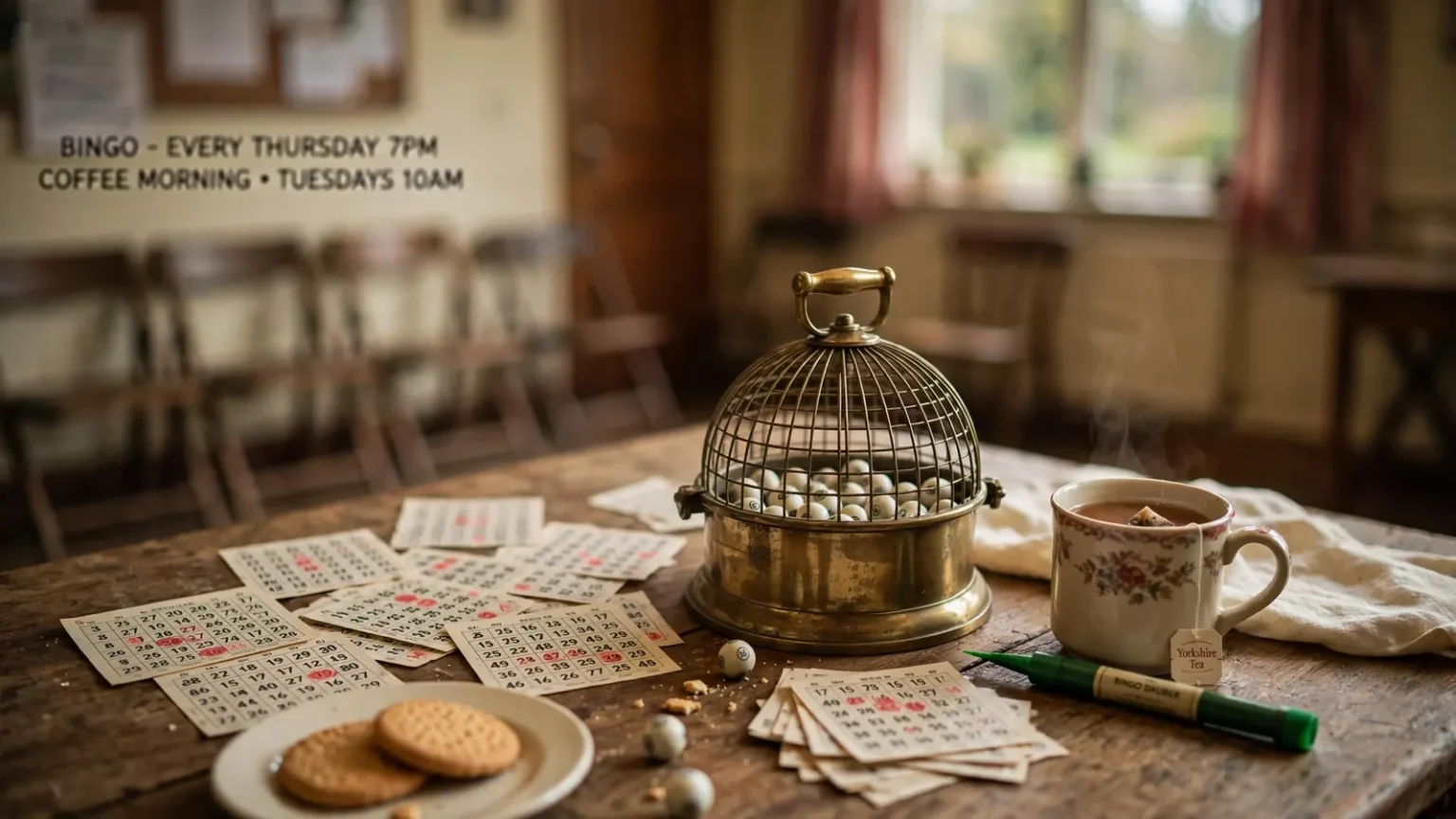
Ticket patterns shape how prizes are claimed, while linked spins, slot play and offer terms affect the wider bingo-site experience.
Bingo Formats and How Their Winning Patterns Work
Online bingo formats differ chiefly in ticket layout and in the pattern needed to claim a prize. The numbers called matter, but a player also needs to know what counts as a completed line or shape in that particular game. These rules define the round’s winning conditions; a pattern completed on one ticket format may have no significance in another.
In 90 ball bingo, each ticket is arranged as a grid of nine columns and three rows. Prizes are awarded for completing one line, then two lines, with the full house as the final pattern. Because the round has these successive stages, a ticket can meet an earlier winning condition before the full house is completed. The format is therefore organised around filling rows rather than tracing a separate shape across the ticket.
The 80-ball format uses a grid of eight columns and four rows. Its winning patterns can be visually distinct: they may include four corners, a letter-shaped arrangement, or a full card. Colour is used to identify patterns in this format, helping distinguish the required arrangement from other marks on the grid. The relevant condition is the named pattern, not simply the number of completed rows.
In 75-ball bingo, the ticket has five columns and five rows. A win depends on completing a specified pattern, which may be a cross, an X, a diamond, the letter T, or a picture frame. The pattern gives each round its particular target: called numbers must fill the required positions on the card.
These differences make the ticket itself part of the rules. Before play, the format indicates whether progress is measured by rows or by a shape, and the game’s stated prize pattern determines when a claim is valid. In online bingo in the UK, recognising the grid and its winning condition is a practical first step in understanding how a round is structured. The shared element is that numbers are called and a prize depends on completing the applicable pattern; the layouts and patterns vary by format.
Online American Roulette in the UK: Rules and Checks · Monopoly Live Casino UK: Game and Casino Checks
Top online casinos in the UK
- SpinFormulaBonus: 550% Up To £15,000 + 550 FS · Payout speed: 1-3 business days
- AmunbetBonus: Join now and get 450% up to 2,700 GBP + 450 FS · Payout speed: 1-3 business days
- NightWinBonus: £900 + 400 free spins · Payout speed: 1-3 business days
- NightLuckBonus: Welcome Pack + 805% Up To 6400€ + 280 FS · Payout speed: 1-3 business days
- DieselwinBonus: Welcome Pack 250% up to £4000 + 200 FS · Payout speed: 1-3 business days
- BritsinoBonus: Welcome Package – Get your £2,200 + 2,000 FS · Payout speed: 1-3 business days
- WinBeastBonus: €5000 + 500 FS + €650 Freebet · Payout speed: 1-3 business days
- EvoSpinBonus: 125% up to €2500 + 125 Free Spins · Payout speed: 1-3 business days
- JetsetspinsBonus: 200% Bonus + 100 Free Spins + Free Royal Wheel · Payout speed: 1-3 business days
- BeOnBetBonus: 100% up to €500 + 100 FS · Payout speed: 1-3 business days
How Bingo Rooms Differ from Casino Games
The distinction between online bingo and casino games is primarily about how a round is organised and how its result is determined. In a bingo room, players take part in the same number draw. Each buys a ticket, numbers are called, and a prize depends on completing the required pattern before other players do. The event is shared: the draw and the competition for a room’s prize are common to those playing that round.
Casino games are not defined by that shared-room structure. They cover different types of play, with rules and outcomes determined by the individual game. A game may involve a player’s decisions, a random result, or a combination of the two, but it does not become bingo merely because it appears on a site that also hosts bingo rooms. The category “casino” is broad; bingo is a particular game format within the wider online gambling landscape.
This difference matters when the terms online casino bingo or bingo casino are used. They may refer to bingo provided by a business that also offers casino games, rather than to a single hybrid game. A bingo room remains identifiable by its ticket, shared draw and pattern-based win condition. The operator’s other products do not change those mechanics. Equally, a casino game does not acquire bingo’s shared number draw simply by being listed beside a bingo room.
Keno Casinos in the UK: Licensing and How to Compare
The experience of participation also differs. In bingo, each ticket enters a player into a defined round in which other participants are seeking the same prize through the same draw. The result depends on whether the required pattern is completed in relation to the other players’ tickets. In a casino game, the player engages with that game’s own rules and outcome process; there need not be a room-wide draw or a race to complete a pattern. The games may therefore sit under one account or on one platform while remaining separate products.
This is a useful distinction for interpreting descriptions such as “bingo and casino” or “online bingo casino games”. Such wording can describe a site that provides both categories, not a guarantee that every listed game combines their features. The room is the relevant setting for bingo’s shared round, whereas other casino products operate according to their own rules. Product labels alone do not establish how a particular game works: its instructions and stated rules are the appropriate basis for understanding its format.
Licensing Requirement
An operator must hold a separate UK Gambling Commission (UKGC) licence to legally provide gambling services to UK players.
Online bingo is legal in the United Kingdom, but legal operation is regulated. An operator seeking to provide gambling services to UK players must hold a separate UK Gambling Commission (UKGC) licence for the relevant activity. The requirement applies to the operator, not just to the bingo room as a section of a website. Where a business offers bingo alongside other gambling products, the presence of bingo does not remove the licensing requirement for the services it provides.
A UKGC licence is therefore a central distinction between a lawful UK-facing service and a site that merely uses familiar casino or bingo terminology. The licence framework covers standards relating to fairness, anti-money laundering and responsible gambling. These obligations concern the operator’s conduct; they do not alter the underlying difference between a shared bingo draw and the separate rules of casino games. A site’s menu, branding or use of the word “bingo” is not itself evidence of authorisation.
For readers comparing online bingo and casino offerings, it is useful to keep two questions separate. First, what is the game’s format: does it use a shared draw and a pattern completed against other players, or does it follow another game’s rules? Second, is the operator authorised to serve UK players? The first is answered by the game’s structure; the second by the operator’s regulatory status. Treating these as distinct questions avoids confusing a product category with the legal status of the business providing it.
Online Casino Without ID in the UK: What to Know
The practical boundary is consequently clear even when a website presents several products together. Bingo is defined by tickets, drawn numbers and a pattern-based competition within a round. Casino games form a broader group with their own formats and outcome rules. An operator may offer both, but each remains a distinct gambling product, and UK-facing services require the appropriate UKGC licensing.
Slots Alongside Bingo: Side Games and Ticket-linked Spins
An online bingo service may place bingo rooms and slot games within the same account or site environment. Their presence together does not make them one game: the bingo room remains organised around tickets and a shared number draw, while a slot is a separate product. The practical connection is therefore in how the operator presents or links the activities, rather than in a change to the underlying bingo round.
One arrangement described in a specialist review ties a slot spin to a bingo-ticket purchase: a player buying a ticket may receive a free spin alongside it. This is a reported offer, not a defining feature of online bingo or a condition that can be assumed across rooms. The details matter because “free” describes the stated price of the spin, not necessarily every rule governing its use or any resulting winnings. Those conditions can depend on the particular offer and are not established by the existence of the link alone.
Some reports indicate that side games may have a lower return-to-player percentage than the bingo room itself.
The purchase-and-spin structure also creates two distinct parts to consider. The ticket is associated with participation in a bingo room; the spin belongs to a slot game. A linked offer may present them as one package, but it does not mean that the slot outcome determines the bingo result, or that the ticket changes how the slot functions. Keeping the activities conceptually separate helps clarify what is being bought and what is being added.
This distinction is relevant when a site promotes bingo and slots together. A shared account or a common lobby can make the products easy to find in one place, but that presentation should not be mistaken for a single game with a combined outcome. The bingo and slot elements retain their own rules and results. Where an offer connects them, the connection is a promotional or purchase arrangement, not evidence that one product’s result controls the other.
A further point concerns return-to-player information. A specialist review has reported that side games can have a lower return-to-player percentage than the bingo room. That comparison should be treated as a reported observation, not a universal rule about every side game or every room. It also does not establish what return applies to a particular slot, nor does it predict an individual result. A percentage describing a game over time is different from a guarantee about what any one player will receive.
The term “side game” can cover activities offered around a bingo room, but the label alone does not settle how closely they are connected to bingo. Some may simply sit alongside the room, while a ticket-linked spin is more directly attached to a purchase. These arrangements should not be conflated: being available on the same site does not show that a game is triggered by ticket buying, and a reported ticket link does not show that every room has the same offer.
Online casino tournaments in the UK: rules and prizes
For a clear description of an online bingo-and-slots service, the useful questions are about the relationship between its parts. Is the slot merely available alongside the bingo room, or is a spin explicitly linked to a ticket purchase? Is the stated spin free, and what conditions apply to it? Are return-to-player figures being compared on a like-for-like basis? The answers need to come from the terms for the specific room or offer; the broad label “bingo and slots” does not supply them.
The combination can therefore take more than one form: separate products housed together, or an offer that connects a slot spin with buying a bingo ticket. The latter has been reported, but it should not be taken as a standard feature. Equally, the reported possibility of lower returns on side games is a reason to distinguish the products, not to infer a fixed relationship across all online bingo sites with slots. A careful account keeps the ticket, the slot, and any offer linking them analytically separate.
What a Bingo Slot Machine Means Online
The phrase “bingo slot machine” can describe a slot game found on a bingo website, but it does not make the game a form of bingo. A slot game is played through its own spin-based format; bingo remains based on numbered tickets and a shared draw. The two may appear on the same platform, yet their rules and outcomes are separate.
Attention: A theoretical return to player (RTP) figure is a measure over many plays and cannot guarantee a win or a recovery of losses in an individual session.
That distinction matters when considering return to player (RTP), the proportion of stakes a game is designed to return over time. Side games may have lower RTP percentages than the bingo room itself. An RTP figure is a theoretical measure across many plays, not a forecast of what an individual session will return. It therefore cannot establish that a particular spin will produce a win, or that playing longer will recover losses.
Online slots in Britain are subject to specific restrictions. Autoplay is banned, and each online slot spin must last at least 2.5 seconds. The maximum stake per game cycle is £5 for adults, following the change that took effect on 9 April 2025. These limits apply to slot play, not to bingo ticket patterns or the timing of a bingo draw.
Legal access is also distinct from the game’s label. Remote gambling operators serving Great Britain must hold the relevant UK Gambling Commission licence; an online slot offered through a bingo-branded service remains gambling and is not exempt from that requirement. UK gambling is for people aged 18 and over. A slot title, theme or placement beside bingo does not alter these conditions.
When assessing a slot, its stated rules and RTP should be read as information about that game, rather than as a claim about the bingo room or the wider site. The relevant comparison is between the slot’s own terms and the bingo product’s terms. Treating them as one product can obscure differences in how play works and in the restrictions that govern it.
Online Casino European Roulette in the UK
Playing Slot Games at an Online Bingo Site
An online bingo site can also provide slot games; the two products do not have to be offered by separate operators. In the UK, however, the operator must hold a current UK Gambling Commission licence to offer real-money gambling legally. The licence requirement applies to the service, not just to its bingo rooms. Gambling is for people aged 18 and over.
A specialist review describes a ticket-linked arrangement in which a bingo room gives a free slot spin for each ticket purchased. This is a reported offer, not a feature that can be assumed to appear at every bingo site or in every room. Its availability may depend on the particular room and the operator’s terms. The spin is linked to buying a ticket, so it should not be treated as an unconditional free-play option.
The distinction matters when comparing what a site offers. A bingo ticket enters a player into a bingo round, while a linked spin is an additional slot-game offer. Having both in one account does not make the spin part of the bingo round, nor does it mean that every ticket purchase qualifies. The specific offer and its conditions determine what is included.
Before treating a linked spin as usable, the terms should make clear which tickets qualify and how the spin is credited. They should also explain what happens to any resulting winnings. A free spin and cash that can be withdrawn are not necessarily the same thing; bonus conditions may apply. Without clear terms, the value of the offer cannot be assessed from the ticket purchase alone.
Do
- Check which tickets qualify for a linked spin
- Verify how the spin is credited
- Review bonus conditions for winnings
Don’t
- Assume linked spins are unconditional
- Treat free spins as immediately withdrawable cash
- Presume ticket-linked offers are standard across all rooms
The practical answer, then, is yes: slots may be available alongside bingo at a UK site, and a ticket-linked free spin has been reported as one way to combine them. That arrangement is not a standard feature that can be presumed across the market. The operator’s licence and the terms attached to the specific room or offer remain separate points to verify.
Real-Money Play: Ticket Costs and Prize Scale
Online bingo played for money involves a direct cost for each ticket, with prices varying between rooms and games. The available price points span from 1p to 5p for low-stakes play, while premium games can charge £1 or more per ticket. Other room descriptions place penny-room tickets at 2p and high-stakes games at £5 or above. These ranges illustrate how widely ticket costs can differ; they do not establish a single price scale used by every operator.
The amount paid for a ticket and the prize attached to a game are related considerations, but a higher ticket price does not by itself establish what a player will win. A specialist review has described a 1p game with a £10 full-house prize and a £1 game with a jackpot in the hundreds or thousands. Those examples are a snapshot reported in that review, not a dependable measure of current prizes across online bingo rooms. Prize pools and advertised jackpots are specific to the game and its terms, so the figures should not be treated as a general promise about what any ticket will return.
Online Casino Games for Real Cash in the UK
For a real-money session, the ticket price is therefore only one part of the cost picture. The amount spent depends on the prices of the tickets selected and how many are bought. A low-priced ticket can still be part of repeated spending, while a more expensive ticket represents a larger outlay for that individual entry. Comparing games on ticket price alone can obscure this difference; the prize structure also needs to be read in the context of the particular room.
The distinction between paid play and promotional play matters when assessing cost. A ticket bought with cash has a stated purchase price. A free or promotional ticket does not require that same direct payment for entry, although its use may be subject to conditions. Any resulting winnings may also have conditions attached. Those arrangements should not be confused with the price of a standard ticket, and the advertised value of a promotion is not itself a measure of the cash cost of playing.
The same care applies when bingo is offered alongside slots for real money. A site may provide both products, but the cost of a bingo ticket and the amount staked on a slot are separate decisions. The presence of both in one account does not make their prices or prize structures interchangeable. For a clear account of expenditure, each activity needs to be considered on its own terms.
Recreational bingo winnings are not taxable in the United Kingdom. This treatment concerns winnings received by recreational players; it does not change the cost of tickets or the terms attached to a game or promotion. Keeping those points separate helps distinguish three different matters: the amount paid to enter a game, the prize that the game may award, and the tax treatment of recreational winnings.
Real-Money Play
- Ticket prices vary widely, ranging from 1p to £5 or more
- Higher ticket prices do not automatically guarantee higher prizes
- Recreational bingo winnings are not taxable in the UK
- Costs of bingo tickets and slot stakes are separate financial decisions
Free Bingo and Slot Offers: Restrictions on Free Tickets
A free bingo ticket removes the ticket price, but it does not necessarily make the resulting prize immediately withdrawable. The offer may limit where the ticket can be used, which draw it applies to, and what conditions attach to any winnings. These details matter more than the word “free” when assessing the practical value of an offer.
Some offers restrict tickets to named rooms or particular ball formats. A ticket valid in one room may not be accepted in another, even if both are available under the same account. The eligible draw and any ticket allocation should therefore be read as part of the offer, rather than assumed to apply across the site. A specialist review describes terms in which tickets may be limited by room or ball type and may expire after 24 hours. That is an example of a reported condition, not a universal deadline: the actual expiry time is set by the specific offer.
The same distinction applies to winnings. A prize from a free ticket may be credited as cash, but that does not necessarily mean it can be withdrawn at once. The credited amount can carry a wagering requirement, so eligible play must be completed before withdrawal is permitted. A specialist review reports wagering requirements for free-ticket winnings in a range from 20x to 65x. This should be treated as a reported range from offer terms, not as a standard applying to every bingo room or promotion. The offer’s own wording determines whether the requirement applies to winnings, how eligible activity is counted, and what happens if the condition is not met.
Live Casino Lightning Roulette in the UK: How to Check
Free bingo offers may appear alongside promotions for slot games, but a free ticket and a free slot play are different benefits. The ticket is used in an eligible bingo draw; any slot-related offer has its own terms and does not make the ticket valid in other rooms. Where an offer combines benefits, each part should be checked separately rather than treated as one unrestricted bundle.
Before using a free ticket, the material points are its eligible room and draw, its expiry, and the treatment of any prize. The wording should also make clear whether winnings are subject to a wagering requirement and whether the ticket must be used before another offer can be claimed. A ticket with narrow eligibility or a short validity period may have limited practical value, while a prize subject to wagering is not equivalent to cash available for withdrawal. These restrictions are offer-specific, so the published terms take precedence over general descriptions of free bingo or associated slot promotions.
Bingo and Slots No-Deposit Bonuses: Terms to Check
A bonus described as “no deposit” should be distinguished from an offer that requires a payment. The label alone does not establish what is included or what must happen before winnings can be withdrawn. The offer’s terms need to state whether it provides cash, bingo tickets, slot play, or a combination, and whether any wagering requirement applies.
A specialist review described a new-player package containing a £10 cash bonus and 30 free bingo tickets. This is a reported offer, not evidence that the same package is available across operators or remains current. It also does not, by itself, show that the bonus is no-deposit: the offer conditions determine whether a deposit is required. The amount and form of each element should therefore be read separately rather than treated as a single unrestricted balance.
No-Deposit Bonus Example
A reported new-player package contained a £10 cash bonus and 30 free bingo tickets, though availability and deposit requirements depend on the specific operator’s terms.
Wagering requirements can materially change the value of a bonus. A specialist review reported deposit-based bingo offers with requirements ranging from 20x to 65x; some applied the requirement only to bonus funds. The terms should make clear which balance is counted, what activity qualifies, and whether ticket spending contributes. Where a requirement applies only to bonus funds, the amount to be wagered differs from an offer that counts both the deposit and bonus. The stated multiple is not meaningful without knowing its calculation base.
Time limits matter as well. A specialist review characterised a 30-day wagering window as typical and reported that the period begins when the bonus is credited. That timing means an offer can start expiring before it is used, rather than when play first begins. The published conditions should be checked for the start point and expiry time; a headline description cannot establish either.
For a combined bingo and slots promotion, the terms should also be read for any distinction between the two products. A bonus may have conditions tied to a particular balance or activity, so the presence of both games does not establish that each contributes equally towards wagering. The key comparison is between the advertised benefit and the conditions governing its use and withdrawal. If those conditions do not clearly explain the requirement, its calculation base and the deadline, the stated bonus value cannot be assessed reliably.
Assessing UK Bingo Sites That Also Offer Slots
A useful assessment of a UK bingo site that also offers slots begins with a verifiable regulatory check, not a ranking or an operator’s promotional claims. An operator must hold a separate UK Gambling Commission (UKGC) licence to legally offer services to UK players. The licence is therefore a threshold requirement, rather than a feature that can be offset by a large game catalogue or an attractive presentation.
Mines Casino Game UK: What Is Actually Known
The site should display its UKGC licence number prominently in the footer. That number can be checked against the Commission’s public register before any deposit is made. A footer statement alone is not proof that the licence is current or applies to the operator providing the service. If the number is absent, or the register does not confirm the operator’s status, the site should not be treated as a verified UK-licensed option.
The licence framework also gives substance to broader claims about standards. UKGC requirements address fairness, anti-money laundering and responsible gambling. Those categories provide a basis for evaluating an operator’s regulatory position, but they do not establish that every aspect of a particular site is equally strong. A licence confirms that the operator is subject to the relevant requirements; it is not a guarantee of a particular playing experience or outcome.
For people comparing bingo sites with slots, the availability of both products should be confirmed on the operator’s own current pages. A description on an old review page may no longer reflect what is offered. The same caution applies to claims that a site is new: launch status and product availability can change, so the date and origin of the information matter. A current operator page can establish what it presents as available, while the UKGC register addresses licensing status. These sources answer different questions and should not be treated as interchangeable.
Verifying UK Sites
- Check for a UKGC licence number in the site footer
- Verify the licence number on the UKGC public register
- Confirm current availability of bingo and slot products on operator pages
- Review the operator’s current terms and conditions
A sound comparison therefore separates evidence into categories. First comes the operator’s identity and licence status. Next is the current evidence that bingo and slot products are both offered. Finally, any claims about quality, breadth or special features require their own support. The existence of a combined catalogue does not by itself show that one site is better than another. Nor does a prominent claim in advertising demonstrate compliance beyond what can be confirmed through the licensing record.
This approach is more reliable than treating “best” as an objective label. Without consistent, independently verifiable criteria, a ranked list can imply a level of comparison that the evidence does not support. A site may be suitable for one person’s preferences and not another’s; the verifiable points are narrower: whether the operator holds the required UKGC licence and whether its own current information shows both bingo and slots.
Mobile availability can also be checked as a factual product detail, but it should not be confused with a regulatory endorsement or a quality rating. A mobile page or application may show that the products are accessible on a particular device; it does not replace the licence check. Likewise, being newly launched is not evidence of better standards. The same licensing requirement applies whether an operator is established or recent.
The clearest assessment is consequently evidence-led and limited in its claims. Confirm the operator on the UKGC register, check that its licence number is displayed in the site footer, and verify the current product offering from the operator’s own information. Treat comparative labels as opinions unless their criteria and supporting evidence are made explicit.
Mobile Play and Account-level Safety Controls
Mobile access does not change the safeguards that apply to a UK gambling account. Online gambling is legal for people aged 18 and over when the operator holds a UK Gambling Commission licence. Before funds can be deposited, operators must verify a customer’s age; identity checks commonly involve a photo ID and proof of address. These requirements apply whether bingo or slot games are accessed on a phone or another device.
Plinko Casino UK: Games, Payments and Licensing
A financial limit must be offered before a new customer makes a first deposit, with account-level controls available afterwards. One specialist review reports that many operators let customers set deposit limits by day, week or month. The available intervals and the process for changing a limit can differ, so the account controls and their terms should be checked before depositing. A limit provides a way to restrict deposits; it does not establish that play will remain within a particular budget.
UKGC-licensed operators must also provide responsible gambling tools, including self-exclusion. They must operate an internal complaints process and give access to an approved Alternative Dispute Resolution service. These protections are tied to the operator’s regulatory obligations, not to the type of device used. The UKGC licence number should be displayed prominently in the site footer and checked against the Commission’s public register before a deposit. If a gambling site does not prominently display its licence number there, close the tab.
Payment restrictions apply on mobile as well. Credit card gambling is banned in the UK, including credit-card funding routed through a money service business. Operators cannot accept wallet payments for gambling if that wallet permits credit-card funds to be used. Debit cards and other permitted methods may be available, but their availability depends on the operator.
Slot controls are relevant when mobile play includes slots: autoplay is banned in Britain, and each online slot spin must last at least 2.5 seconds. These are product rules rather than settings that can be switched off in an account. Together with deposit limits, identity checks and self-exclusion, they form part of the safeguards applying to mobile bingo and slot sites.
Are online bingo winnings taxable in the UK?
No. Recreational players in the UK do not pay tax on online bingo winnings.
When is the best time to play for smaller prize pools?
Outside the peak hours of 7pm to 11pm. Bingo rooms typically schedule their largest prize pools during those hours.
How do 90-ball and 75-ball bingo differ?
90-ball bingo uses a 9×3 ticket and awards prizes for one line, two lines and a full house. 75-ball bingo uses a 5×5 ticket, with wins based on completing a specified pattern such as a cross, X or diamond.
Material created by the team Kassu


